

Empowering educators and engaging students at Metropolitan College
30.07.2026 • 3 minutes
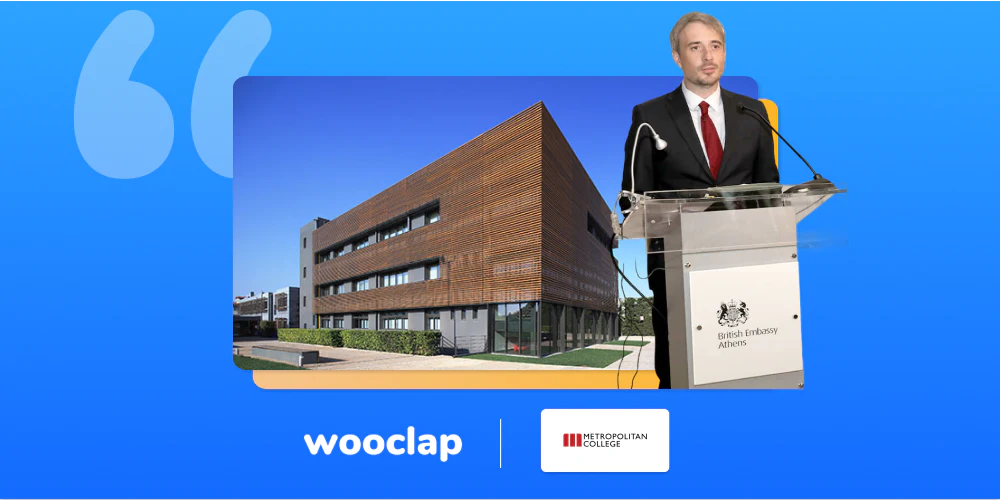
For many institutions, digital tools are often just a "fancy effect." At Metropolitan College, the shift toward active learning is driven by a specific goal: metacognition. By involving students as co-creators of the lesson, the faculty ensures students don't just "hear" the material, they understand what they know in real-time.
Guest: Antonis Mouhtaropoulos, Dean of Digital Learning & EdTech, Metropolitan College (Greece)
When you hear the term "active learning," what does it look like in the daily reality of Metropolitan College?
Antonis Mouhtaropoulos: Our basic initiative is to ensure students participate as we go. We want them to be part of the whole learning process rather than just reacting to a professor’s lecture. Essentially, we are trying to move the learning aspect from the teacher to a wider circle where students learn from each other and lecturers learn from students.
By co-creating throughout the classroom, students develop metacognition—the ability to "know what they know." This building of knowledge happens in real-time during the lecture, seminar, or workshop, and continues after the material has been delivered. Whether using polling software or other EdTech, the goal is the same: making them active participants in their own growth.
Could you share a specific project where teaching methods were redesigned to increase engagement?
A.M.: We recently redesigned the first few weeks of our online asynchronous courses. We specifically included ice-breaking activities so that students feel more engaged with one another. When students feel connected to their peers, they don’t feel disconnected from the institution; they feel part of a wider educational community. This sense of belonging is a vital precursor to active learning in a digital environment.
How has the "onboarding" experience changed for new students to reflect this more active approach?
A.M.: We’ve moved onboarding sessions to an asynchronous online format. This allows students to pre-read materials and watch videos before they even arrive at the institution. Previously, the orientation process was too condensed—students received a massive amount of information in just two or three days and couldn't process it all. By spreading this out and allowing them to adapt at their own pace, the transition into our educational environment is much smoother.
Through this co-creation in the classroom, students develop metacognition—the ability to 'know what they know.' Whether we use polling tools or other EdTech technologies, the goal remains the same: for them to become active participants in their own development.
Antonis Mouhtaropoulos, Dean of Digital Learning & EdTech at Metropolitan College
Changing long-standing teaching habits can be difficult. How do you encourage faculty to adopt these active methods without it feeling like a burden?
A.M.: This is a change management challenge. Every new technology demands a learning curve, which requires effort from both new and existing staff. We try to present the benefits from a performance perspective: when technology is used correctly to foster active learning and metacognition, student retention increases.
If students learn better and perform better in their assessments, it reflects well on the module and the lecturer. We encourage the use of EdTech specifically to increase satisfaction rates. When faculty see that these tools lead to better-prepared students and higher satisfaction, the shift feels less like a chore and more like a strategic advantage.
In traditional lectures, there is often a "blind spot" where teachers don’t know if students understand the material until the final exam. How are your educators catching misconceptions in real-time?
A.M.: We use formative assessments every few weeks to "scaffold" the information. By using quizzes, discussion forums, or other types of formative checks every five weeks, we urge students to revision their material and catch up. This allows both the student and the teacher to identify gaps in knowledge early on, rather than waiting for a high-stakes final exam.
Looking ahead, how do you see the role of technology evolving to foster genuine curiosity rather than just digitizing old habits?
A.M.: Artificial Intelligence is obviously the main conversation right now. However, we are focused on finding the correct utilization of AI—moving beyond just a "fancy effect" to something that actually increases student engagement and improves learning outcomes. We are looking for those specific use cases where technology acts as a bridge to deeper exploration.


A monthly summary of our product updates and our latest published content, directly in your inbox.