

Digital Transformation in Higher Education
21.08.2026 • 5 minutes
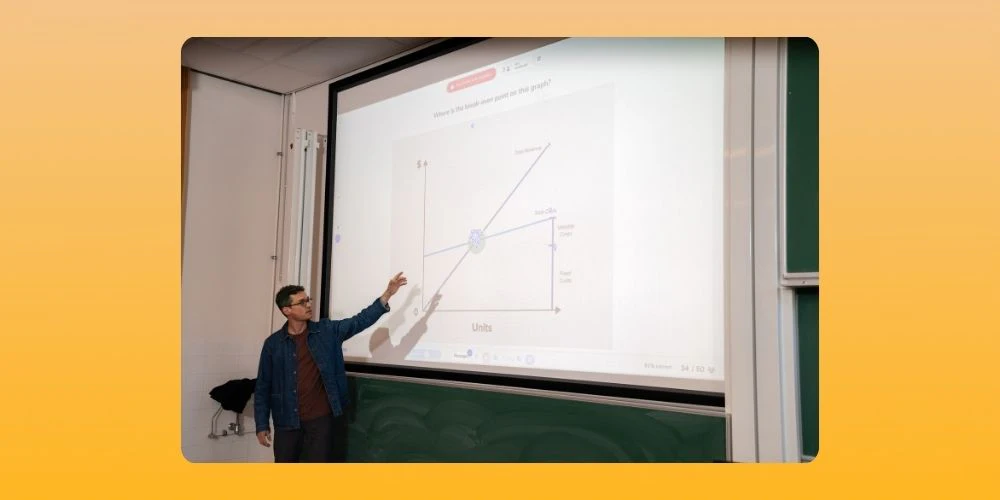
In a third-year engineering course, 98% of students said interactive tools helped them engage better with the material (Moreno-Medina et al., 2023). Digital transformation in higher education is changing teaching and learning processes, reshaping how institutions adopt digital technologies,developing new content models, addressing new challenges, and redesigning campuses. This shift is reflected in three French higher education practitioners' perspectives: Olivier Rollot (Headway Advisory), Nadia Jacoby (Simone et les Robots), and Benjamin Six (ESSEC).
Key Takeaways:
- Digital transformation in higher education is not a one-time technology rollout. It's an ongoing shift in how institutions approach technology, support students, and operate.
- Institutions that invest in instructional design alongside technology see better and longer-lasting adoption of hybrid formats.
- Student digital literacy gaps are a real barrier. Academic software requires explicit teaching, not just access.
- Interactive tools like live polling, competition mode, and attendance tracking give instructors real-time visibility and turn passive lectures into active learning experiences.
From Emergency Response to Everyday Practice
In higher education institutions the biggest concern was hybrid teaching. Today it's standard practice, and the teaching and learning models institutions use have changed fundamentally. Institutions did not just buy software but rethought their teaching practices, technological approaches, and content delivery processes, and brought in people to support faculty and curriculum development alongside new digital technologies. Data played a key role in that shift.
Universities saw that professors kept using hybrid formats well beyond the initial rollout. Physical spaces changed too. ESSEC's DECK turned a traditional classroom into a well-connected space built for collaboration, not lectures. This is a model now influencing how institutions approach technological innovation, system design, technological development, and the creation of connected learning environments.
"Fewer books, more interaction." (Olivier Rollot, Headway Advisory)
On the student side, remote and hybrid learning still need ongoing support. First-year students especially tend to struggle with organization and integration. Most students navigate social apps without guidance, but academic and learning platforms are different. The digital literacy needed for academic platforms needs to be taught, not assumed, as Nadia Jacoby has pointed out.
Digital skills that feel basic to faculty often need to be taught explicitly, and providing learners with the right digital resources and practical development support is part of the institution's responsibility.
"You can't just transpose an in-person course into a remote one." (Nadia Jacoby)
The physical campus hasn't disappeared. Its role shifted from a place to deliver information to a place to build human connections between students, faculty, and ideas. The result is a learning environment where in-person and human-centered digital experiences reinforce rather than replace each other.
Interactive Tools for Higher Education
The large lecture halls, blended learning models, and growing challenges around student engagement and technological change have encouraged the use of educational technologies, digital content delivery, and innovation in teaching practice that can help in stimulating student engagement and giving the instructor the ability to monitor the understanding of students in real time. Lecture halls have the capacity to accommodate 300 students; however, in the absence of a tool for monitoring the understanding of these students, there is no way of knowing if they understood the concepts or simply agreed with what was said to them. The most common types of these digital learning platforms used across university systems and colleges today include live polling and formative quizzes, collaborative brainstorming activities, competition-based assessment, and attendance tracking integrated within the institution's learning systems. Addressing critical knowledge gaps through these tools is a key benefit for faculty managing large cohorts across multiple systems. These tools give instructors the data they need to identify knowledge gaps and support personalized learning strategies across different learner groups.
Wooclap Features for Higher Education
Wooclap combines these tools and technologies in one platform, supporting a range of educational content formats: live voting and multiple choice questions, brainstorms and word clouds, interactive presentations, competition mode, attendance tracking, as well as LTI 1.3 integration with your institution's LMS, and engagement analytics and reports for professors and managers. These reports support data-driven decision-making, helping institutions allocate resources, address funding priorities, and respond to real challenges across departments where they are actually needed, not just in particular classrooms. Interactive presentations combine all of the above activities, integrating tools in one slide deck without any additional software in class. The self-paced option adds interactivity outside the lecture hall, facilitating personalized learning, addressing different learner needs, and supporting data-driven teaching practices, curriculum development, and addressing learner needs in flipped-classroom and distance learning approaches.
Wooclap is much more than a student response system. It's about communication, collaboration, and conversation in the classroom." (Chris Lorch, Lead for Learning Technologies, Duke University)(1)
Explore live polling · See interactive presentations · See attendance tracking

Testimonials
Across different disciplines, the same pattern shows up: these practical, human-centered approaches to educational innovation turn passive attendance into active participation.
Professors at UCLouvain have employed Wooclap to allow the students themselves to determine the content and structure of their class, including topics, order, and complexity on a weekly basis.
Saint Marc Campus has turned the classroom on its head by allowing students to design and conduct their own Wooclap sessions, incorporating the preparation stage into the learning process.
The University of Edinburgh saw a similar shift. Within one semester, student participation rose 30%. As one instructor put it: "Students enjoy it. Works well with groups that are relatively new at working with each other. Gives confidence to those who might not speak up in class, but who will write and submit ideas and responses." (Learning Technology Advisor, University of Edinburgh,(1)
The EPF uses quiz review as an engaging tool: 'We turn on competition mode to challenge them a little and they love it. They make it more into a game.'" (Antonin Bourgeois, physics instructor).
It is not an isolated phenomenon. These kinds of examples recur in business schools, health curriculums and engineering departments, as seen at Duke University.
Conclusion
Digital transformation within the higher education sector is no longer an urgent measure. This is a continuous practice built on practical decisions: designing one interactive class, tracking one session, and remodeling one learning space and rethinking one content strategy, one technology decision, and one data process at a time, in such a way that promotes student success. It does not matter whether it involves creating a five-minute quiz after every important piece of information or redesigning the learning space; it all depends on the practical needs of learners and the specific challenges of each institution, not theory. Try a live poll yourself to see what that looks like in your own classroom.
Frequently Asked Questions
What is digital transformation in higher education?
It is a shift in how institutions redesign teaching and learning processes, adopt digital technologies and innovation practices, and support learners, going beyond one-off tool purchases to rethink processes and how educational content and knowledge is delivered, assessed, and adapted to learner needs.
What are the biggest challenges in digital transformation for higher education?
The most common challenges include uneven digital literacy among learners, the need for ongoing faculty development, limited funding for infrastructure, and providing equitable access to digital resources and learning platforms across departments. Those institutions that treat these as ongoing practices rather than one-off projects succeed in their efforts.
What technologies support digital transformation in higher education?
Key educational technologies include live polling, collaborative brainstorming, competition-based assessment, and LMS-integrated attendance tracking. Digital platforms like Wooclap combine several into one system, supporting both in-class and personalized learning strategies. Engagement analytics help faculty track content delivery and learner progress across platforms and systems.
How does interactive technology improve student engagement in lectures?
Interactive technology gives instructors real-time analytical visibility into whether students understand a concept, instead of waiting until an exam to find out. Case studies from institutions like EPF and ARCPP show it also increases participation, a key outcome for faculty evaluating technology adoption, alongside sustained attention during long lecture blocks.
What role does data play?
Data and technology-driven approaches let institutions track engagement, spot where learners are struggling, and allocate resources based on actual need. Engagement analytics and learner data inform these decisions, supporting key processes and systems across institutions.
Source:


A monthly summary of our product updates and our latest published content, directly in your inbox.