

Optimizing instructional design in your institution.
New to Wooclap? Join us for our next group live demo!
When learners see it, they get it
Some images alone don't group through words alone. By combining visual questions with images, diagrams, and ideas, Wooclap helps learners connect theory to practice and builds immediately more effectively.
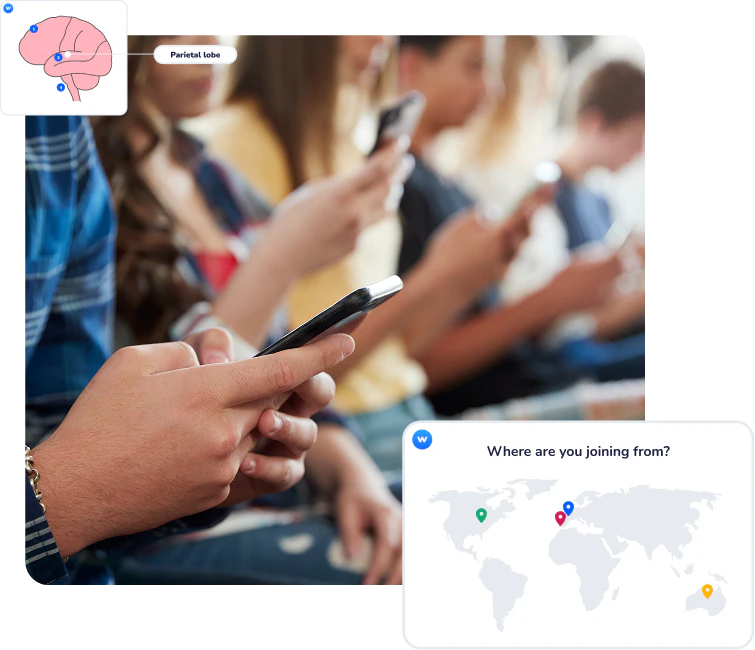
Visuals make learning easier to apply
Visual question activities, image-based assessments and annotations, are the most effective formats in how education can find learning.
Guide observation and accuracy
Find on image questions help students identify a place, organ, or structure — and supports spatial and visual learning, as well as asking their exact comprehension in question format.
Make opinions visible
A variety of visual polls, word clouds, and annotation allow every student, the shy, the active, and the hesitant, to take opinion without discussion in front of peers.
Connect words to meaning
Dual coding theory shows that combining verbal and visual information activates two encoding channels simultaneously, making knowledge more likely to stick and easier to retrieve.
Learning works better when it's visible
Visual questions instantly improve the quality of the learning experience by having the individual learner process visual information directly. Better results and faster learning occurs in real time.
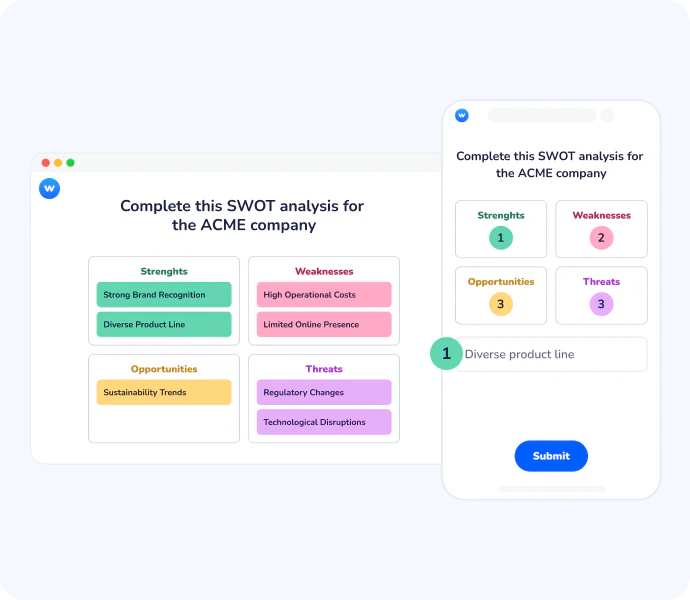
When images change how learning happens
When the students actually see a photo of it that they then have to engage with whether it is identifying where something is or labeling it, it really does help the students understand this is how it works in the body.
 Elizabeth GregoryLecturer of Nursing at the College of Coastal Georgia
Radiology has always been taught in an image-rich, interactive environment, but I think what Wooclap does is allow it to be distributed across the entire audience.
 Sheri HarderPediatric Neuroradiologist, BCCH and Clinical Professor of Radiology at the University of British Columbia (UBC)
The student could have a direct look at his decision making and compare with the other students but also with the panel of experts, and it could help to have such kind of a discussion, reflexivity about what is the good or bad professional behaviour.
 Maxime DucretProfessor, Université Claude Bernard Lyon 1
The right question types for visual learning
Use 3 or 4 of Wooclap's question types with images, diagrams, and visual content to support observation, identification, and deeper reasoning.


Bring visual learning into your existing tools
Wooclap works directly inside the tools you already use to build and present visual content, so there's no extra platform to learn and no disruption to your session.


What makes the difference in real teaching situations
From seeing to deciding
Wooclap turns a passive visual into an act of decision, then reasoning before explaining.
Theory with practice
Clicking directly on an authentic visual helps learners connect what they see to a concept
Better recall through visual links
Associating verbal labels, numbers, and visual knowledge creates multi-channel retention and makes abstract content easier to remember.
Understanding visible to everyone
See how the class interprets a diagram in real time, including after the fact, so you can correct early before misconceptions become fixed.
Inclusive participation
Visual questions give every learner a low-barrier way to respond — no need to formulate an answer verbally.
Safe practice to adjust, not learn
In medicine or technical fields, learners can rehearse spatial decisions in a safe environment
Make learning visible through images with Wooclap!
Help learners engage, collaborate, and understand better with Wooclap’s interactive activities.
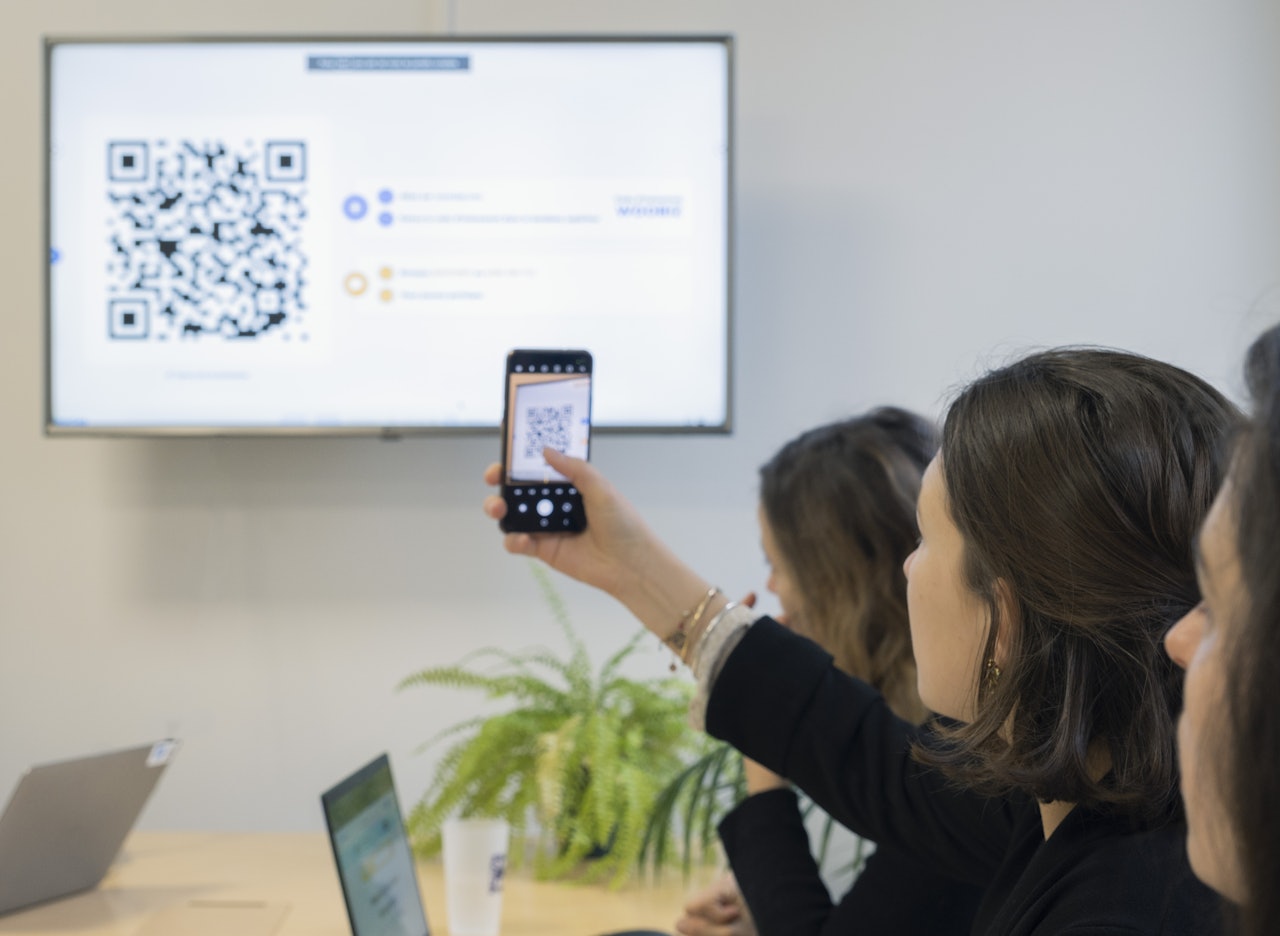
Explore other ways to enhance learning
 Product update
Drag-and-Drop Question: a new way to check visual understanding
Discover the new Wooclap question: Drag and drop