

Optimizing instructional design in your institution.
New to Wooclap? Join us for our next group live demo!

Compare what matters
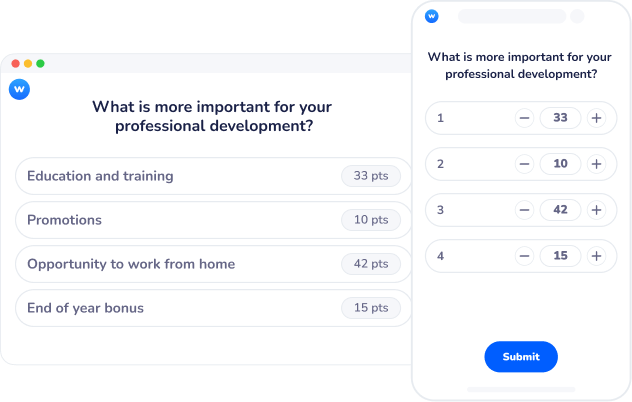
The Prioritization question turns decision-making into a clear, quantifiable process. By giving participants a fixed budget of points to distribute among different options, you force a "real-world" choice that reveals what truly matters most to your audience.
Cut through the noise to find what matters
Force meaningful trade-offs
When everything is a priority, nothing is. By using a "fixed-sum" method, participants must decide which ideas deserve the most weight, preventing the common trap of rating every item as "highly important."
Quantify the "why" behind the vote
Move beyond a simple "thumbs up." This feature captures the intensity of preference, showing you not just what people like, but how much more they value one option over another.
Build instant alignment
The results are aggregated into a weighted ranking in real time. This immediate visual data helps you move from debate to action by highlighting the clear winners and the points of contention.
Turn passive voting into active thinking
The Prioritization question shifts the participant’s mindset. Because they have a limited budget of points, they are required to compare each item against the others. This intentional reflection leads to a more accurate and honest reflection of the group's collective intelligence.
High-impact prioritization practice
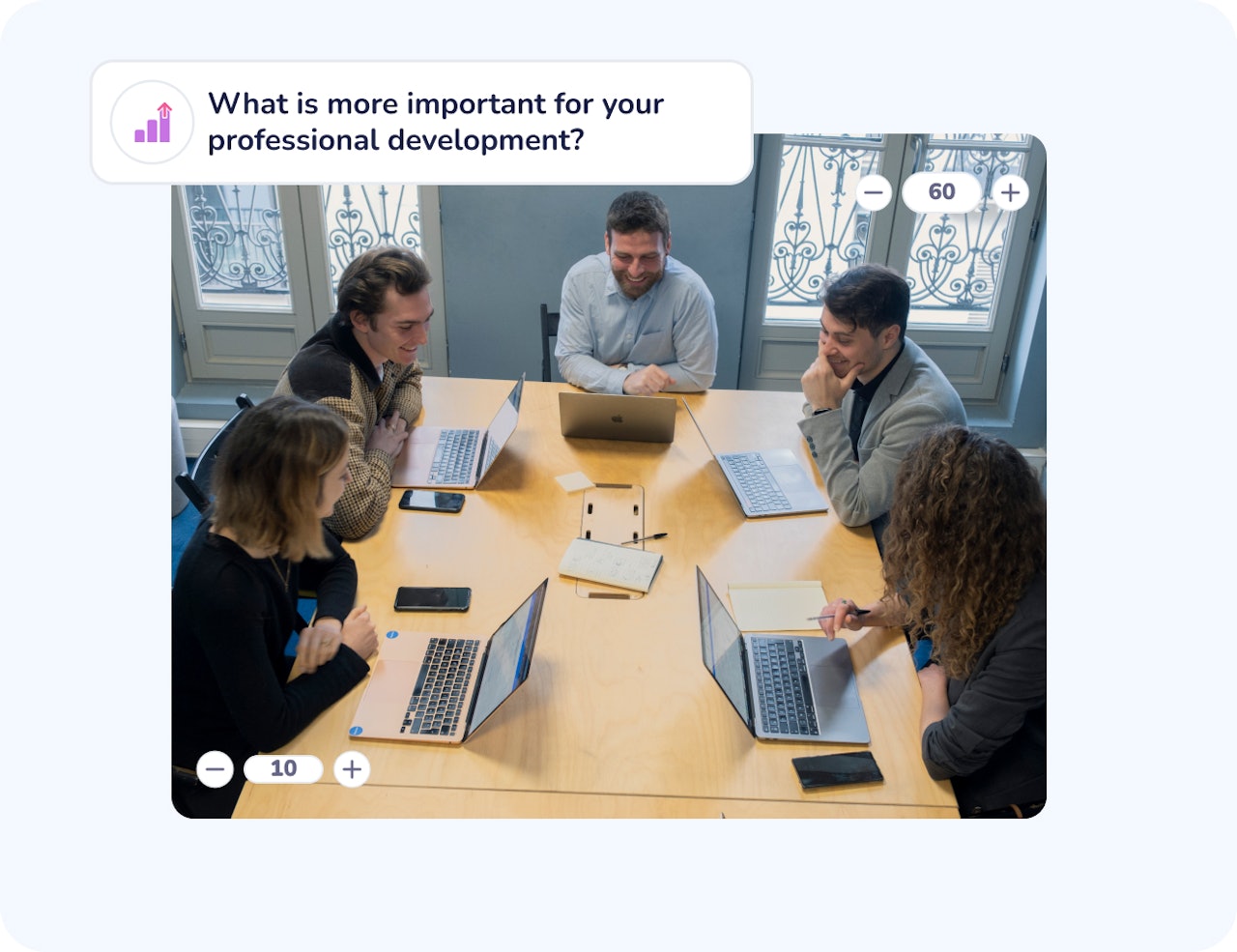
In complex learning scenarios, the goal is not to agree on a decision but to learn how to rank what matters most. The Prioritization question asks learners to order options based on impact, urgency, or strategic value. The resulting visualization makes their reasoning visible, creating a clear starting point to analyze trade-offs, criteria, and judgment. It turns abstract decision-making into structured practice.
How Prioritization works
Create the list
Add the items you want participants to prioritise, such as concepts, actions, solutions, arguments, or criteria relevant to your session.
Set the ranking scale
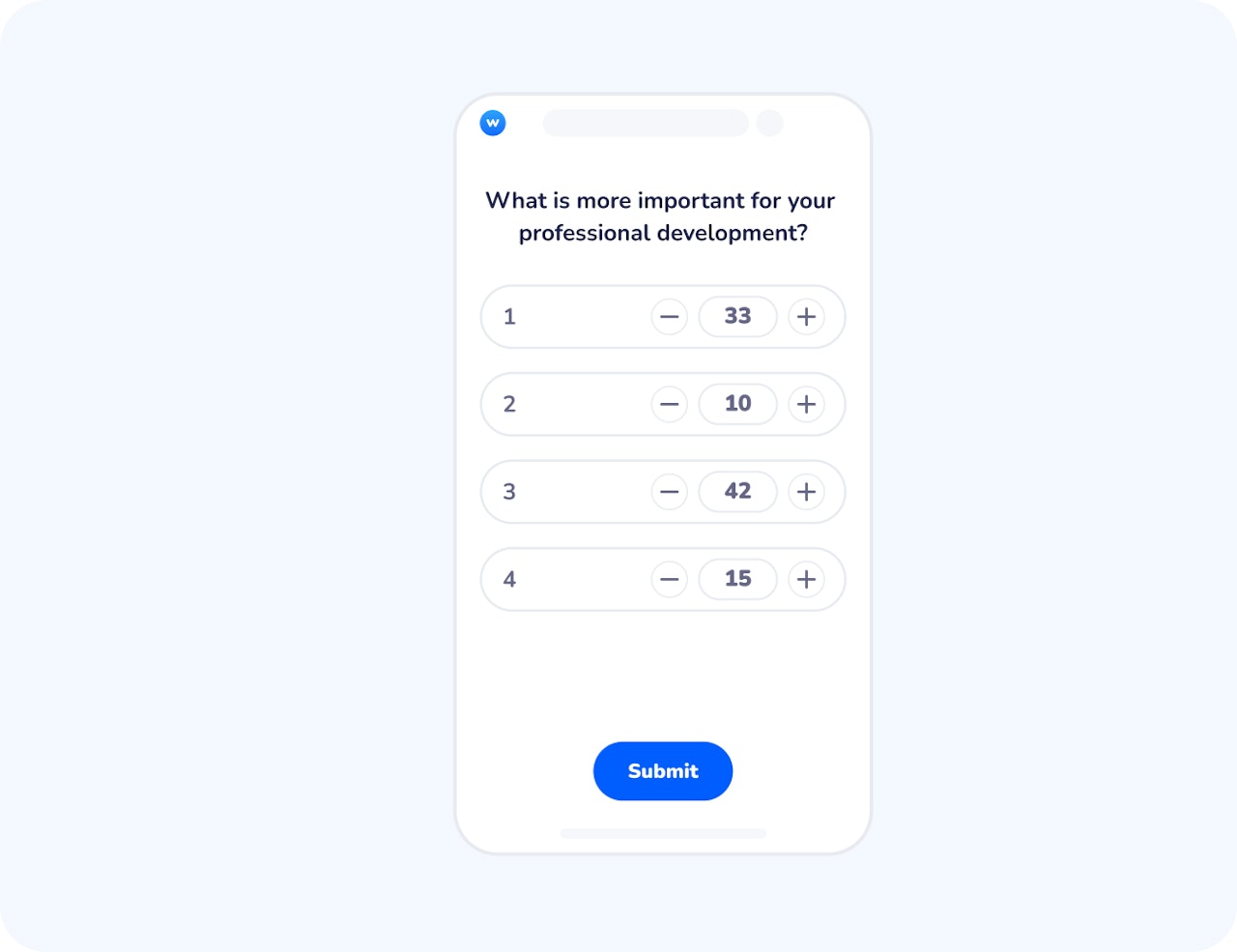
Define how participants will assign value by distributing a fixed number of points. You choose what the points represent, for example importance, urgency, or impact.
View group priorities
Participants allocate their points across the items. Results are aggregated to show how value is distributed, highlighting collective priorities and trade-offs.
How educators use Prioritization
Prioritization is useful whenever comparison and value judgement are more important than correctness or popularity.
Class discussions
Ask learners to distribute points across arguments, causes, or solutions to surface reasoning and relative importance.
Clinical or crisis management training
Rank possible responses under constraints to practice structured judgment in complex situations.
Leadership and resource allocation exercises
Prioritise projects, stakeholders, or strategic initiatives to develop analytical thinking and trade-off evaluation.
Decision-making simulations
Ask learners to prioritise actions, risks, or interventions in realistic scenarios, and analyse the criteria behind their choices.
Reinforce learning after the session
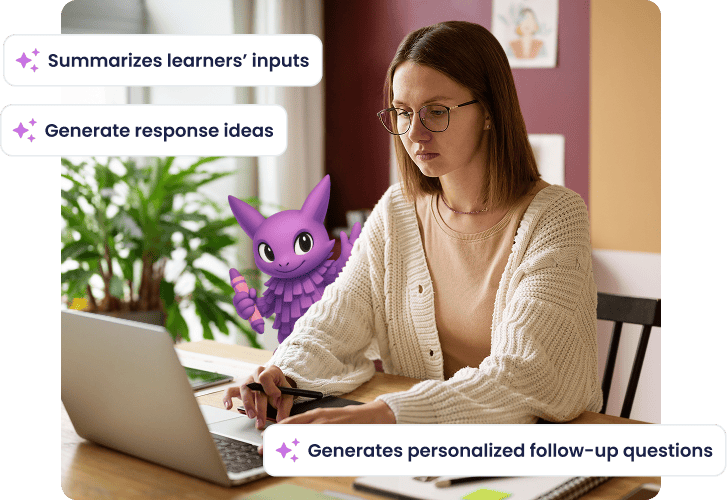
Wooclap’s AI agents help you move from ideas to structured activities more easily. They support question creation and review, helping you gain clarity and save time while you remain in control of every pedagogical choice.
Make collective priorities visible
Create point-based prioritization questions
Ask participants to distribute a fixed number of points across items to express relative value.
Define your evaluation criteria
Use points to represent importance, urgency, impact, or any criterion relevant to your context.
Collect individual value judgements
Each participant allocates points independently, ensuring balanced participation.
Aggregate results into clear insights
View how points are distributed across items to identify group priorities and trade-offs.
Support structured discussion
Use results as a concrete basis for debate, clarification, or decision-making.
Use live or asynchronously
Run prioritization during a live session or allow participants to respond in their own time.
Start prioritizing better today
Make your next decision-making session more objective, engaging, and decisive with Wooclap’s Prioritisation question.

Frequently asked questions
Have questions? We’ve got answers to help you !