

Optimizing instructional design in your institution.
New to Wooclap? Join us for our next group live demo!
How to Build an Effective Training Program? An Expert’s Answer
22.03.2026 • 5 minutes
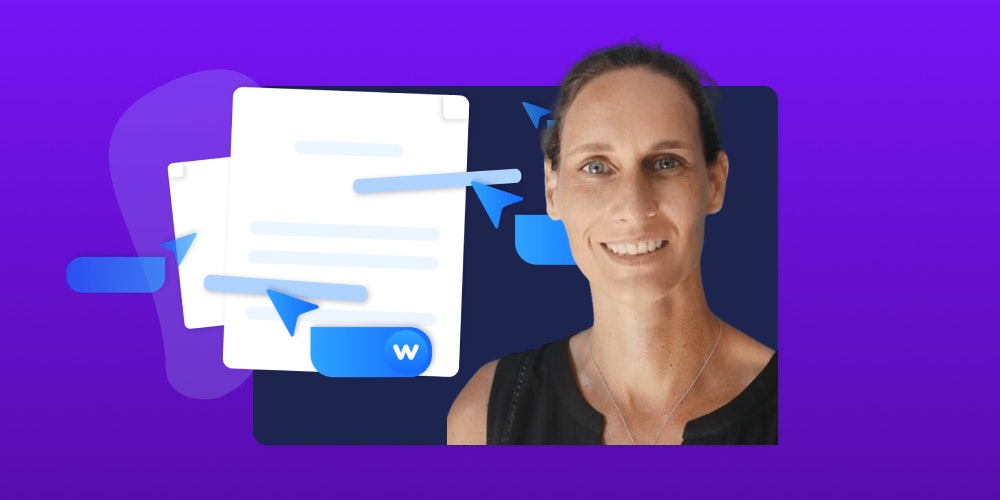
Rather than listing generic steps, we chose to address the issue at its root by speaking with an expert. To understand how to build a program that generates tangible impact, we interviewed Anne-Eva Lebourdais, founder of the learning design agency Apprenance Digital and recognized specialist in instructional engineering. This article, written by Charlotte Faure from Wooclap, reveals her methodology for transforming a simple training idea into a real competency lever for your organization.
What is a training program? Moving beyond a simple definition
Before diving into the “how,” it is essential to clarify the “what.” A professional training program is not just a sequence of content. It is a structured and intentional journey designed to close an identified skills gap. It starts from a measurable need (Point A) and guides a group of learners toward a defined performance objective (Point B). The quality of its design determines its success.
The foundational step: detailed needs analysis
For Anne-Eva Lebourdais, everything begins with investigation.
“The first thing, absolutely essential, is a detailed analysis phase.”
Launching a program without this step is like building a house without foundations.
Meet stakeholders in the field
To deeply understand needs and challenges, immerse yourself in operational reality and meet different stakeholders:
- Managers: to understand strategic objectives and performance expectations
- Experienced employees: to identify best practices and critical know-how
- Target employees: to uncover friction points and recurring questions
This raw data becomes the foundation of your program.
Create a learner persona
Once the skills gap is identified, it can be tempting to focus on content production. For Anne-Eva, this is precisely the risk.
“To ensure impact, we must shift from a content logic to a learning experience logic. And for that, we need to know who we are designing for.”
Creating a learner persona allows you to embody your audience.
This profile synthesizes key elements: work environment, constraints, digital literacy, motivations, fears.
“This persona becomes our compass. At every design step, format choice, activity, tone, we refer back to it.”
This is particularly crucial in onboarding contexts, where training is part of a broader integration journey.
Structuring the program: the power of backward design
Now that we know who we are designing for, we must define the pedagogical structure. Anne-Eva recommends backward design.
“Start from the work situation: what must the learner concretely be able to do?”
This reverses the traditional approach of listing knowledge to transmit.
The method:
- Identify the final competency
- Break it down into knowledge, skills, and behaviors
- Define learning objectives using:
“At the end of the training, the learner will be able to…” - Design the assessment aligned with those objectives
- Select activities and content last
This ensures strong pedagogical alignment between objectives, activities, and evaluation. It eliminates unnecessary content and facilitates ROI measurement.

Best practices and common mistakes to avoid
Building an effective training program requires rigor. Here are some expert tips to help you avoid common pitfalls.
Co-creation is key
Anne-Eva Lebourdais emphasizes this strongly: “You can’t build an effective training program on your own.” The project must be co-created with all stakeholders: subject-matter experts, managers, and especially trainers. Their expertise in supporting adult learners is invaluable to ensure the program is well received and effectively delivered.
Training is not always the right solution
Sometimes, a thorough analysis reveals that the root cause of a performance issue is not a lack of skills, but rather an organizational, process, or resource-related problem. “A detailed analysis may show that the issue is actually organizational,” the expert warns. In such cases, imposing training would be a waste of time and resources.
Think about tools from the start
The choice of tools should not come at the end. It must be integrated into the design of learning activities. Do you need e-learning modules, virtual classrooms, interactive quizzes, or simulations? Selecting the right training tools is key to learner engagement. Moreover, new technologies, particularly AI in training, can become powerful allies to support you in creating relevant content.
Need a solution for your organization?
Talk to our experts to deploy Wooclap at scale and design training programs that have a real impact on your teams’ performance.
Measuring impact: continuous evaluation and improvement
A training program does not end with the final session. Its effectiveness is measured over time. It is essential to establish a feedback loop to evaluate results and adjust for future iterations.
Collecting feedback both immediately after and some time later is a goldmine. A well-structured post-training survey provides valuable insights into the relevance of the content, the quality of facilitation, and how well the objectives were perceived as achieved by participants.
FAQ: Training Program
What is a training program?
A structured learning journey designed to develop specific competencies in response to a need.
How do you create one?
Use backward design. Start from a real-world task, define required skills, design the final assessment, then create supporting activities.
How do you make it engaging?
Vary formats, integrate real case studies, encourage active participation. Interactive training drives stronger impact.
What is the manager’s role?
Before: clarify objectives.
During: provide time and support.
After: ensure application and recognize progress.
Ready to create interactive training?
Move from theory to practice. Integrate interactivity at the heart of your programs to captivate learners and maximize retention.


A monthly summary of our product updates and our latest published content, directly in your inbox.