

The best teaching strategies rooted in neuroscience.
10.09.2026 • 8 minutes
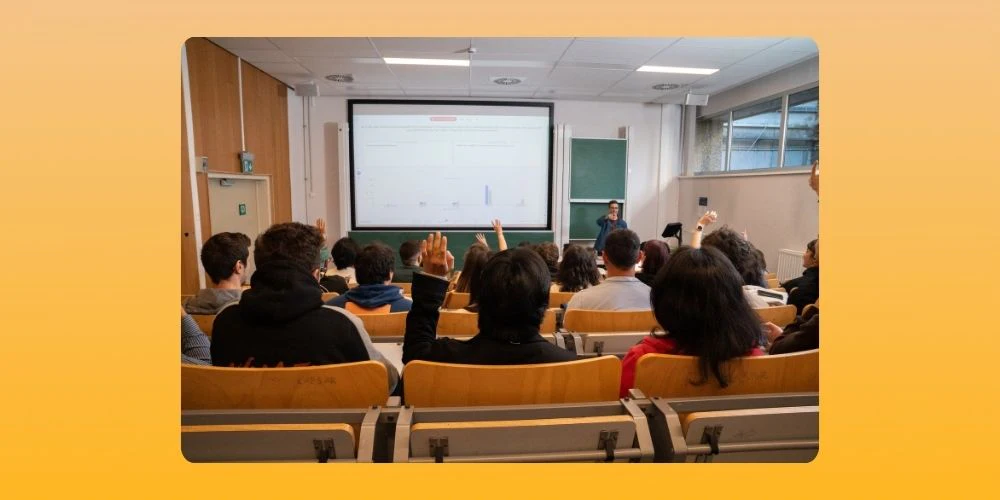
Teaching is hard. It’s not the complexity of the content that makes it hard, but making it stick. The right strategy makes the difference. Many different teaching strategies exist, but each one works in different contexts and with different students. Sometimes they have to be combined. Research shows that the right approach can move students from the 50th to the 70th percentile on standardized tests. Here's an overview of the most effective teaching strategies to help every student learn better.
Key Takeaways:
- The brain retains what it actively works with. Active learning consistently outperforms passive listening.
- Spaced repetition and retrieval practice beat cramming for long-term memory.
- Gamification and formative assessment boost engagement and help teachers spot knowledge gaps in real time.
- Teachers combine strategies and adapt to their students, group size, and format.
Table of Contents
What are teaching strategies?
Teaching strategies are methods and techniques teachers use to structure lessons, engage students and make students retain learning.
Also known as teaching methods or instructional strategies, they shape how students experience and retain a lesson. A strategy which works for one class might not work for another. The most effective method is to combine several, adapting to each classroom. How you teach shapes whether the students actually learn. A teacher who relies on the same approach for every class ends up losing half of the students and it will only reach some. Effective teaching strategies are the ones that adapts and helps students build real life skills like critical thinking, problem solving and communication. This will help teachers manage time efficiently, less time repeating the same content and more time on deepening understanding.
The science behind effective teaching
The strategies in this article are built on one core principle: Active learning. It puts students in the driver's seat. They actively participate in the learning process, as opposed to other traditional methods where students listen and remember knowledge and content in a passive way.
Neuroscience and education tells us why this matters. The brain only remembers what it actively works with and not everything it listens to. Working memory has its limits and information that isn't actively processed rarely makes it into the long term in memory. An interactive classroom that feels safe makes way for effective learning.
These principles help students think critically and solve problems. Every strategy in this guide is built around these principles. When students revisit and apply knowledge, the brain strengthens and supports long-term memory. Emotions also play a vital role. Students learn better in a class where they feel safe and comfortable making mistakes. An interactive classroom environment is where real learning happens.
The best pedagogical approaches for educators
There are many teaching methods and techniques to modernize your teaching, and some are more efficient or practical than others. Here's a list of the most effective ones to help you find what works, techniques that are used by teachers across subjects and levels. Don't forget, you can combine several of these strategies to come up with the perfect match that fits your style as well as your students!
Active learning
Active learning is not about just listening, but actively participating. It is one of the most effective methods to help students retain information. It’s about creating moments in your lesson so that they discuss, question and apply what they have learned. Real examples make it even better for the students to understand.
There are many ways to make your lessons more interactive. Encourage students to investigate and find answers themselves, which will force them to think, practice and apply their knowledge rather than passively listening. Think pair share activities, inquiry based learning and project based learning are great starting points. All of them put students in charge. Pair share activities build confidence. Even giving your students a few seconds of wait time before answering will improve the depth of their responses.
Active learning strategies enhance knowledge retention, build critical thinking and problem-solving skills. The benefits of active learning are clear: learners who actively participate retain more and face fewer challenges recalling information.
Spaced repetition and retrieval practice
Spaced repetition is one of the most effective ways to make memories last. Instead of cramming all the information at once, students revisit materials at regular intervals, each time strengthening their memory. Regular practice makes knowledge stick long-term.
Flashcards are one of the best tools for long-term memory. Widely used during the revision phase, flashcards can also be upgraded for a better learning experience. Those little cards are useful to break up a lesson into chunks that are easier to study, and they help students focus on the concepts they struggle to learn. So why not step up your teaching game by proposing online interactive flashcards to your students? This will allow them to become more active in the learning process, anytime, anywhere.
Wooclap includes features to create flashcards, thanks to its online tool called Wooflash. Furthermore, its AI features allow you to quickly and easily design not only your flashcards, but also multiple choice questions to assess your students. The benefits of spaced repetition are learners who review content at intervals consistently outperforms those who cram all the information at once.

Gamification
Gamification, also known as game based learning or play based learning, is an effective way to grab students' attention. Encourage their learning in many fun ways, especially for younger students. Adding interactivity to your lessons using animations and multimedia content is a great way to make a lasting impression on students. This, in turn, helps them remember knowledge in a more effective way!
Seek inspiration in games! Set up a reward system, hand out points for experience, or give them missions to complete, like a quest or a challenge. These small rewards motivate students to respond well. Play-based learning works well when effort is rewarded. The benefit goes beyond rewards and engagement, learners develop skills to tackle challenges with confidence.
Formative assessment and feedback
Formative assessment means testing students' knowledge and understanding directly during the lesson, not just at the end. Interacting directly with content makes it easier to remember. Adding quizzes to your lessons is highly recommended to improve the teaching rhythm and student engagement. Regular assessments help teachers spot gaps before it gets late.
Using Wooclap is a good way to do so. Its many types of questions allow you to find the ones that are best adapted to your lesson and to each situation like open questions, multiple choice questions, polls. It works in any format.
Why not include your students actively in the process of improving your lessons? Their input can shape your lessons for the better. Take time to collect their feedback, especially when you introduce new concepts or use new teaching styles. It's the perfect occasion to encourage them to ask questions about the lesson, share valuable ideas and clarify aspects they still struggle with.
Wooclap includes a rating question feature, specifically designed to allow students to rate your class and share their opinion on different aspects of your course. Teachers get real-time help to adjust their lessons and learners feel heard.
Collaborative learning
Collaborative teaching is the perfect example of how much teaching has evolved recently. This method promotes cooperation between teachers and students to build new learning ways that make the most of everyone's skills.
Collaborative learning means that students become active in the learning process. They work in groups to help each other and fill knowledge gaps. Students can cooperate with the teacher to prepare tasks adapted to the learning goals. This method encourages teamwork, communication, and it boosts classroom engagement.
Collaborative teaching works in a classroom, around a table, but also online, through platforms that offer tools like white boards or message boards. Wooclap features all these tools and even more to implement collaborative learning! These create richer discussion, strong peer support and better content retention for all learners.
Create your first quiz in 2 minutes
Polls, quizzes, word clouds: over 20 question types to get your audience interacting.
How to choose the right teaching strategy
Every strategy does not fit every classroom. The best strategy depends on what you want your students to take away from the classroom, and how you teach.
Start with your goal. Direct instruction works well for introducing new concepts. It gives clarity before applying knowledge to real situations. Choose spaced repetition and retrieval practice for long-term retention. To build critical thinking, collaborative learning is the best method. Need to boost engagement during the class? That’s where gamification and active learning strategies play a vital role.
The group size, age and knowledge matter a lot. A large lecture hall needs different tools than a small seminar. Adapting your method to individual students' needs can make a huge difference when you have a mixed group.
In-person, remote or hybrid, each setting has its own constraints. What works in the classroom might not work for remote classes, so you need to adapt your teaching methods and tools.
Most teachers don’t stick to one strategy. They adapt as they teach to attain their goal, without disrupting the flow of their lesson.

How Wooclap supports effective teaching
Wooclap helps teachers put these strategies into practice. In a world where technology and society require teaching to evolve, Wooclap allows a seamless and efficient transition. Whether you need to create quizzes or polls, to provide online resources to your students, or to implement collaborative methods in your classroom, Wooclap adapts to all aspects of modern teaching.
Every feature is built around Dehaene’s four pillars of learning: attention, active engagement, feedback and consolidation. With more than 20 question types, Wooclap gives you a tool for every moment of your lesson.
Gives confidence to those who might not speak up in class, but who will write and submit ideas and responses.
Conclusion: putting it into practice
Effective teaching strategies prioritize working with the brain. They grab attention, demand active effort, create feedback loops and give time for knowledge to stick.
Teaching is hard, but with the right strategy, it becomes manageable and more meaningful for your students, whether you use spaced repetition, formative assessment or gamification. Each strategy covered in this guide is rooted in brain science to make learning work.
Teachers who use Wooclap are already seeing the results. At the University of Edinburgh, interactive teaching helped students who never spoke up in class find their voice.
You don’t need to change everything at once. Start with a quiz at the beginning of the lesson or a poll mid-session. Encourage students to collaborate with each other during an activity. And see how all these small changes make a difference. This is where good teaching begins. And where learning sticks.
Frequently asked questions
What are teaching strategies?
Teaching strategies, also called teaching methods or instructional strategies are approaches teachers use to deliver lessons, engage students, and improve learning. Also known as teaching methods or instructional strategies, they cover direct instructions and collaborative learning. They shape how students experience and retain content. Classroom teaching strategies can range from direct instruction to project based learning. The goal is always the same: help students learn.
What is the most effective teaching strategy?
Active recall, spaced repetition, and formative assessment are the most effective for long-term retention. Effectiveness depends on your goal, your students, and your context. Most teachers combine several strategies rather than relying on one. Differentiated instruction adapts your approach to each learner, which makes a real difference in mixed groups.
How do you choose the right teaching strategy?
Align the strategy to your learning goal, your students, and your format. Think about what you want students to walk away with, who you're teaching, and whether you're in person, remote, or hybrid. Most teachers adapt as the lesson unfolds, even small adjustments like wait time can change the quality of responses.
How does Wooclap support teaching strategies?
Wooclap offers more than 20 interactive question types built around neuroscience. Whatever strategy you use, Wooclap has a tool for it. In any classroom setting, from large lectures to hybrid and online sessions.


Vary your teaching techniques with Professor Felder
A monthly summary of our product updates and our latest published content, directly in your inbox.